
ELENCE FRAGRANCE · JOURNAL
A Two-Scent Layering Experiment You Can Actually Compare
Try a controlled layering experiment with two familiar fragrances, separate reference days and one small change at a time.
Updated 09/10/2026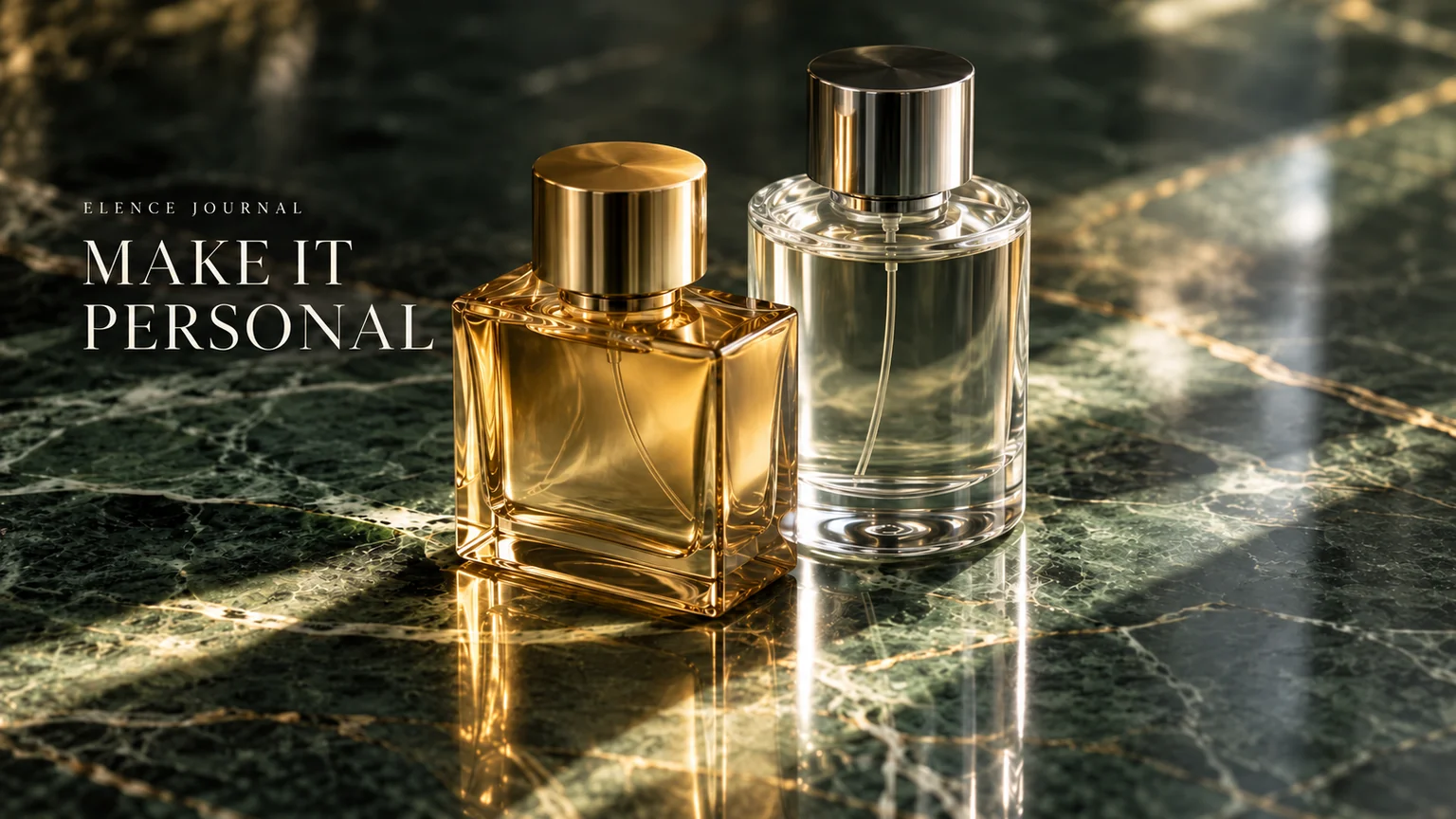
Set a goal before combining scents
Layering means wearing fragrances together. Start with a specific question: would a woody scent make a fresh favourite feel warmer, or would a bright scent lighten a sweet one? A clear goal helps you assess the result. A perfume is already a finished composition, so wearing it alone remains a perfectly complete choice.
Keep two reference days
Wear fragrance A alone on one day and fragrance B alone on another. Keep brief notes on the opening and later impression. Choose days with a similar routine if possible. Without these reference points, it is easy to mistake the character of one perfume for an effect created by the combination.
Make the first pairing deliberately light
On the next trial, use a small application of each product as directed. Try it at home first. Keep the bottles separate; do not pour oil into a spray bottle or mix liquids inside a sample vial. Wearing products together is a different experiment from changing their formulas.
Judge the balance after the opening
Notice which fragrance leads, whether the second adds something you enjoy, and whether the result feels clearer or busier. A sweet scent may dominate a quieter one. If the mixture feels crowded, return to each fragrance alone. There is no requirement to rescue every combination.
Change one variable on the next trial
If you like the idea but the balance feels wrong, reduce one fragrance while keeping the other similar. Record that change. Do not add a third perfume at the same time: you will lose track of what made the difference. Keep a pairing only if you prefer wearing it to either scent on its own.